Amusement Park Construction Cost in India: Rides, Land & Infrastructure
Building an amusement park in India is a capital-intensive project involving land, rides, civil construction, electrical systems, roads, parking, landscaping, safety infrastructure, food and beverage facilities and working capital.
The total investment can vary dramatically depending on the park’s size, location, ride mix and business model.
According to an industry assessment cited in ImagicaaWorld’s FY2024–25 annual report, Indian amusement and theme parks can broadly be classified as:
| Park Category | Indicative Capex | Land Area | Approx. Annual Visitors |
| Small Park | Below ₹100 crore | Below 10 acres | Below 3 lakh |
| Medium Park | ₹100–400 crore | 10–40 acres | 3–6 lakh |
| Large Park | Above ₹400 crore | Above 40 acres | Above 6–10 lakh |
These figures are industry averages and indicative only; actual project costs can be significantly different depending on location, land prices, attractions and development standards.
For an entrepreneur, therefore, the correct question is not simply “How much does an amusement park cost?”, but rather:
How much will my specific park cost to build, operate and finance?
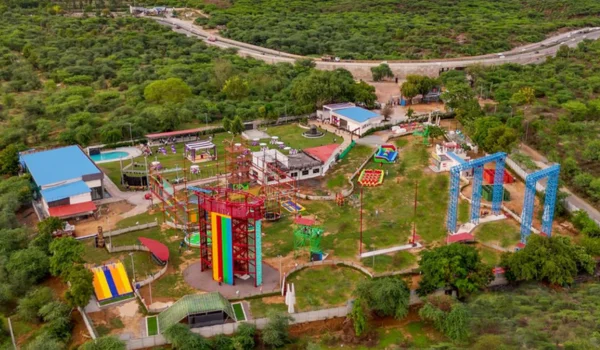
What Is Included in Amusement Park Construction Cost?
The overall project budget generally includes:
- Land
- Site development
- Civil construction
- Amusement rides
- Electrical infrastructure
- Water and sewage systems
- Roads and parking
- Landscaping
- Theming and decoration
- Restaurants and food courts
- Safety and security
- Ticketing and technology
- Professional fees
- Licences and approvals
- Pre-opening marketing
- Working capital
Not every project requires the same components.
For example, an indoor family entertainment centre may require substantially less land and civil infrastructure than a 40-acre outdoor amusement park.
- Land Cost
Land can be one of the biggest components of an amusement park project.
The required land depends on the concept.
Small Park
Generally below 10 acres.
Medium Park
Approximately 10–40 acres.
Large Park
More than 40 acres.
These classifications are consistent with the industry assessment cited by ImagicaaWorld.
However, land requirement should not be determined only by the number of rides.
You also need space for:
- Parking
- Internal roads
- Restaurants
- Toilets
- Service buildings
- Ride maintenance
- Landscaping
- Emergency access
- Utility infrastructure
- Future expansion
Buy vs Lease
Entrepreneurs generally have two options:
Purchase land
or
Take land on a long-term lease/licence arrangement.
Buying land requires significantly more upfront capital but creates a long-term real-estate asset.
Leasing can reduce initial capital requirements and allow more money to be invested in rides and visitor facilities.
- Site Development Cost
Raw land is rarely ready for immediate amusement-park construction.
Site development may include:
- Land levelling
- Soil preparation
- Drainage
- Boundary walls
- Internal roads
- Utility trenches
- Water systems
- Sewage systems
- Electrical infrastructure
- Storm-water management
The cost depends heavily on the existing condition of the land.
A flat, well-connected plot may require considerably less site preparation than a difficult or undeveloped site.
- Amusement Ride Cost
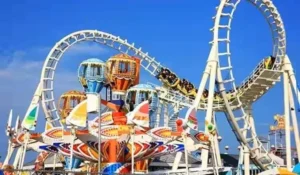
Rides are one of the most important investments in an amusement park.
The attraction mix can include:
Family Rides
- Ferris wheel
- Carousel
- Bumper cars
- Family train
- Flying chairs
Thrill Rides
- Roller coaster
- Drop tower
- Giant swing
- Pendulum ride
- High-speed rides
Children’s Attractions
- Mini rides
- Kids’ train
- Mini Ferris wheel
- Soft-play areas
- Interactive attractions
Technology-Based Attractions
- VR
- 4D/5D theatre
- Simulators
- Interactive games
There is no universal price for a ride.
The final cost depends on:
- Manufacturer
- Country of origin
- Capacity
- Ride technology
- Engineering
- Shipping
- Installation
- Civil foundation
- Testing
- Taxes and duties
- Safety systems
- Spare parts
Therefore, entrepreneurs should obtain project-specific quotations from multiple ride manufacturers before finalising the DPR.
- Roller Coaster Cost
Roller coasters can become one of the most expensive attractions in an amusement park.
Cost depends on:
- Track length
- Height
- Speed
- Capacity
- Number of trains
- Launch technology
- Theming
- Imported components
- Installation requirements
A small family coaster and a large high-speed coaster can have completely different budgets.
Therefore, instead of using a generic “roller coaster price”, the DPR should specify the exact ride concept and obtain a supplier quotation.
- Civil Construction Cost
Civil construction can include:
- Entrance building
- Ticket counters
- Restaurants
- Food courts
- Retail shops
- Toilets
- Administrative offices
- Maintenance buildings
- Storage facilities
- Staff facilities
- First-aid centres
- Guest service areas
Large themed buildings can be considerably more expensive than basic utility structures because they may require architectural theming, specialised interiors and entertainment technology.
- Roads and Parking
Parking is often underestimated by first-time amusement-park developers.
A park attracting several thousand visitors on a busy day may require substantial parking capacity.
Construction may include:
- Entry roads
- Exit roads
- Parking areas
- Bus parking
- Two-wheeler parking
- Traffic-control systems
- Pedestrian pathways
- Security gates
Poor parking and traffic management can negatively affect the visitor experience even if the rides are excellent.
- Electrical Infrastructure
An amusement park can have substantial electricity requirements.
Electricity is needed for:
- Rides
- Lighting
- Restaurants
- Air conditioning
- Pumps
- Ticketing
- CCTV
- Security
- Water treatment
- Sewage treatment
- Emergency systems
The project may require:
- Transformers
- Distribution panels
- Cabling
- Generators
- Backup systems
- Earthing
- Lightning protection
- Emergency power
Electrical design should be completed by qualified professionals as part of the overall engineering plan.
- Water and Sewage Infrastructure
Water is required for:
- Toilets
- Restaurants
- Cleaning
- Landscaping
- Fire safety
- Cooling systems
A large park may require:
- Water storage tanks
- Pumping systems
- Water-treatment systems
- Sewage-treatment plant
- Drainage
- Rainwater management
These facilities should be planned during the master-planning stage.
- Landscaping and Theming
Landscaping can significantly influence the appearance and visitor experience.
It may include:
- Trees
- Lawns
- Gardens
- Decorative lighting
- Pathways
- Water features
- Themed structures
- Sculptures
- Character installations
A theme park generally requires substantially more investment in theming than a simple amusement park.
Themed zones can also increase the park’s social-media appeal and create additional opportunities for photography and merchandise.
- Food Courts and Restaurants
Restaurants are not just an expense; they are also a major revenue source.
The industry assessment cited by ImagicaaWorld estimates food and beverage at approximately 15–18% of amusement and theme park revenue.
Construction costs may include:
- Kitchen
- Dining area
- Food counters
- Storage
- Refrigeration
- Seating
- Plumbing
- Exhaust systems
- Interior design
A park can operate a combination of:
- Food courts
- Cafés
- Quick-service restaurants
- Premium restaurants
- Snack kiosks
- Safety and Security Infrastructure
Safety should be a core component of the construction budget.
Infrastructure can include:
- Fire-fighting systems
- Fire alarms
- Emergency exits
- CCTV
- Security systems
- First-aid centre
- Emergency communication
- Crowd-control barriers
- Emergency lighting
- Evacuation routes
India’s amusement industry association IAAPI highlighted safety regulations and the need for streamlined clearances during a 2026 interaction with the Ministry of Tourism, showing that safety and regulatory compliance remain important industry issues.
- Ticketing and Technology
Modern amusement parks increasingly require digital infrastructure.
Possible investments include:
- Online ticketing
- QR-code entry
- POS systems
- RFID wristbands
- Mobile applications
- Digital signage
- CCTV
- Visitor analytics
- CRM
- Cashless payments
Technology can also help parks understand:
- Peak hours
- Ride utilisation
- Visitor spending
- F&B demand
- Repeat visits
- Professional and Consultancy Costs
The project may require professionals such as:
- Architects
- Structural engineers
- MEP consultants
- Landscape designers
- Ride consultants
- Fire-safety consultants
- Legal professionals
- Financial consultants
- Project-management consultants
These costs should be included in the initial project budget rather than added later.
- Licence and Approval Costs
Depending on the state and project, costs may arise for:
- Land-use permissions
- Building approvals
- Fire approvals
- Electrical inspections
- Environmental permissions
- Food licences
- Local municipal permissions
- Ride inspections
- Other regulatory requirements
There is no single nationwide amusement-park licence fee.
The approval budget should therefore be prepared according to the exact location and project design.
- Pre-Opening Marketing Cost
Marketing should start before the park opens.
Pre-opening expenditure can include:
- Website
- Social media
- Google advertising
- Outdoor advertising
- Influencer campaigns
- School partnerships
- Corporate outreach
- Launch events
- Promotional material
A new amusement park has to build awareness before it can generate substantial visitor revenue.
- Working Capital
This is one of the most important components of the project.
Even after construction is completed, the park needs cash to pay:
- Salaries
- Electricity
- Maintenance
- Marketing
- Insurance
- Food inventory
- Repairs
- Administrative expenses
- Loan interest
Therefore, 100% of the available capital should not be spent on construction and rides.
Illustrative Amusement Park Construction Budget
Consider a hypothetical 15-acre medium-sized amusement park.
The following is an illustrative planning model:
| Component | Illustrative Budget |
| Land/Long-term lease component | ₹5 crore |
| Site development | ₹2 crore |
| Rides & attractions | ₹12 crore |
| Civil construction | ₹5 crore |
| Electrical & utilities | ₹2 crore |
| Roads & parking | ₹1.5 crore |
| Landscaping & theming | ₹1.5 crore |
| F&B facilities | ₹1 crore |
| Safety & security | ₹0.75 crore |
| Technology/ticketing | ₹0.5 crore |
| Professional/approval costs | ₹0.5 crore |
| Pre-opening marketing | ₹0.5 crore |
| Working capital | ₹1.5 crore |
| Illustrative Total | ₹33.25 crore |
Important: This is a hypothetical planning example, not a current market quotation. Actual construction costs can be much higher depending on land price, ride specifications, imported equipment, construction standards, financing and location.
In particular, the industry-level data cited by ImagicaaWorld indicates that medium parks can have average capex of ₹100–400 crore, which shows why a ₹33 crore example should only be viewed as a smaller/leaner concept rather than a benchmark for every medium park.
Small vs Medium vs Large Amusement Park Cost
A practical way to think about investment is:
| Park Type | Indicative Industry Capex | Typical Concept |
| Small | <₹100 crore | Local/family amusement park |
| Medium | ₹100–400 crore | Regional destination park |
| Large | >₹400 crore | Major destination/theme park |
The industry figures above are based on industry classification and should not be interpreted as fixed construction quotations.
A developer can potentially build a smaller park for substantially less than the industry average if the concept uses fewer rides, leased land, simpler infrastructure and limited theming.
How Much Does Land Contribute to Total Cost?
Land contribution can vary dramatically.
For a project in a major metropolitan area:
Land may become the single largest investment.
For a project outside the city:
Land may represent a much smaller percentage of total project cost.
This creates an important strategic decision:
Expensive Urban Land
Higher land cost + potentially stronger catchment
Peripheral Land
Lower land cost + potentially higher transportation dependence
The correct choice depends on the number of potential visitors within the target travel radius.
How to Reduce Amusement Park Construction Cost
- Lease Instead of Purchase
A long-term lease can reduce initial capital requirements.
- Build in Phases
Instead of building everything at once:
Phase 1 → Core rides
Phase 2 → Additional attractions
Phase 3 → Hotel/retail/events
This can reduce initial financial pressure.
- Prioritise High-Demand Attractions
Do not purchase expensive rides simply because they look impressive.
Choose rides based on:
- Target age group
- Capacity
- Throughput
- Expected popularity
- Maintenance cost
- Revenue potential
- Avoid Excessive Theming
Theming should support the concept without consuming unnecessary capital.
- Optimise Land
Use the land efficiently while maintaining appropriate safety, access and visitor circulation.
Construction Cost vs Total Project Cost
This distinction is extremely important.
Construction Cost
May include:
- Civil works
- Roads
- Buildings
- Utilities
- Landscaping
- Infrastructure
Total Project Cost
May additionally include:
- Land
- Rides
- Professional fees
- Approvals
- Pre-opening marketing
- Financing costs
- Working capital
Therefore:
Total Project Cost ≠ Construction Cost
An entrepreneur looking for financing should prepare a complete Project Cost / CAPEX + Working Capital statement, rather than presenting only the civil construction estimate.
How to Calculate Amusement Park Project Cost
A simple structure is:
Total Project Cost = Land + Site Development + Rides + Civil Works + Infrastructure + Safety + Theming + Professional Fees + Pre-opening Costs + Working Capital
Then calculate:
Cost Per Acre = Total Project Cost ÷ Land Area
For example, if a ₹100 crore project uses 20 acres:
₹100 crore ÷ 20 = ₹5 crore per acre
This metric can be useful when comparing different project concepts, although it should not be used as the only investment metric.
Construction Timeline
A large amusement park can take several stages:
Stage 1 — Feasibility
Market research and financial modelling.
Stage 2 — Land and Approvals
Land due diligence, zoning and regulatory permissions.
Stage 3 — Master Planning
Architectural, engineering and attraction planning.
Stage 4 — Civil Construction
Buildings, roads and utilities.
Stage 5 — Ride Installation
Foundations, installation and testing.
Stage 6 — Landscaping and Theming
Finishing, landscaping and guest areas.
Stage 7 — Staff Training
Operations, safety and emergency procedures.
Stage 8 — Testing
Ride, fire, electrical and operational testing.
Stage 9 — Soft Launch
Limited opening to identify operational problems.
Stage 10 — Full Launch
Public opening and commercial operations.
The actual timeline depends on the scale of the park, approvals, imported equipment, construction conditions and supplier schedules.
Why Ride Cost Should Not Be Considered Separately
A common mistake is to look only at the purchase price of a ride.
The real cost can include:
Ride Price + Shipping + Taxes/Duties + Foundation + Installation + Electrical Work + Safety Systems + Testing + Spare Parts + Theming
Therefore, a ride quoted at ₹1 crore does not necessarily mean the attraction will cost only ₹1 crore to make operational.
How to Prepare a Reliable Construction Budget
Before investing, obtain at least:
- Land quotation
Purchase or lease cost.
- Civil contractor estimate
Based on actual site drawings.
- Ride supplier quotations
Preferably from multiple suppliers.
- MEP estimate
Mechanical, electrical and plumbing.
- Landscape estimate
Based on the master plan.
- Safety estimate
Fire, CCTV, security and emergency systems.
- Professional fee estimate
Architects, engineers and consultants.
- Contingency
Keep a contingency reserve for cost overruns.
Final Verdict
The amusement park construction cost in India can range from a few crores for a relatively small entertainment concept to several hundred crores for a large destination park.
Industry-level data cited by ImagicaaWorld puts:
- Small parks: below ₹100 crore
- Medium parks: ₹100–400 crore
- Large parks: above ₹400 crore
with land areas broadly below 10 acres, 10–40 acres and above 40 acres respectively. These are indicative industry classifications, not fixed market prices.
The biggest cost components are generally:
Land + Rides + Civil Construction + Infrastructure + Utilities + Safety + Theming + Working Capital.
For an entrepreneur, the best strategy is to prepare the DPR and detailed bill of quantities before purchasing rides or starting construction. A phased development model can also reduce initial capital pressure and allow the park to expand according to actual visitor demand.
Most importantly, do not evaluate the project only on construction cost. The final investment decision should be based on:
Total Project Cost + Expected Footfall + Average Revenue Per Visitor + Operating Cost + EBITDA + ROI + Payback Period.
Business Park Group — Exploring Parks, Business & Opportunities.