How to Start an Amusement Park Business in India: Step-by-Step Guide
Starting an amusement park in India can be a high-investment but potentially rewarding business opportunity. The sector includes large outdoor amusement parks, theme parks, family entertainment centres, mini amusement parks and integrated entertainment destinations.
According to an industry assessment cited in ImagicaaWorld’s FY2024–25 annual report, India’s amusement and theme park industry was estimated at ₹108–114 billion in FY2024 and is projected to grow at approximately 9–11% CAGR through FY2030. The industry is also expanding beyond major metros into Tier-2 and Tier-3 cities.
However, starting an amusement park is very different from starting a normal retail or service business. It requires substantial capital, land, engineering, safety systems, regulatory approvals, professional management and a strong understanding of visitor demand.
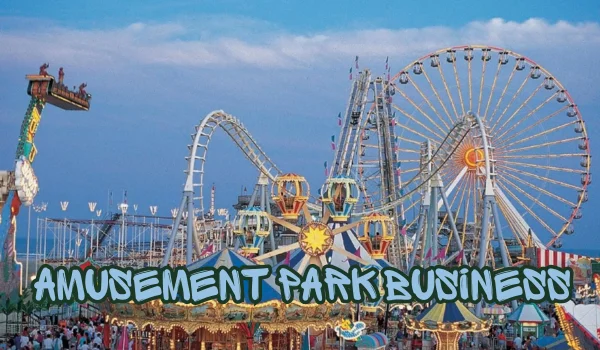
Here is a step-by-step guide.
- Decide What Type of Amusement Park You Want to Build
The first step is defining the business model.
Possible formats include:
- Family amusement park
- Theme park
- Adventure park
- Indoor amusement centre
- Family entertainment centre
- Mini amusement park
- Integrated amusement and water park
- Destination entertainment resort
Your choice determines the required land, investment, rides, staffing and approvals.
For example, a small indoor entertainment centre may operate from a few thousand square feet, while a large outdoor amusement park may require dozens of acres.
Industry data cited by ImagicaaWorld classifies large parks as generally above 40 acres, medium parks around 10–40 acres and small parks below 10 acres, although actual requirements vary by concept.
- Conduct Market Research
Before purchasing land, study your target market.
Research:
- Population within your catchment area
- Number of families
- Average household income
- Tourism traffic
- Existing amusement parks
- Competitor ticket prices
- School and college population
- Corporate demand
- Weekend traffic
- Transportation connectivity
- Seasonal tourism
- Local entertainment preferences
A park should not be selected only because land is cheap.
A cheaper location with poor accessibility can be more expensive in the long run because of low visitor footfall.
A useful question is:
How many potential customers can realistically reach the park within 1–3 hours?
This catchment analysis should be completed before committing substantial capital.
- Select the Location
Location is one of the most important decisions in an amusement park project.
Look for:
- Highway connectivity
- Proximity to a major city
- Tourist destinations
- Airports or railway stations
- Population growth
- Parking availability
- Availability of utilities
- Suitable zoning
- Expansion potential
- Safe access roads
A location outside a major city can reduce land costs while still attracting visitors if road connectivity is strong.
The importance of accessibility is increasing as India’s road, rail and air infrastructure expands. The industry report cited by ImagicaaWorld identifies improved connectivity and domestic tourism as major growth drivers.
- Estimate the Land Requirement
Land requirements depend on the park concept.
As a broad planning reference:
| Park Type | Indicative Land |
| Indoor/FEC | Few thousand sq. ft. |
| Small outdoor park | <10 acres |
| Medium park | 10–40 acres |
| Large park | >40 acres |
| Integrated destination | 40+ acres |
These are broad industry classifications, not mandatory legal requirements. Actual land requirements depend on rides, parking, landscaping, restaurants, service areas, future expansion and local planning rules.
For example, DDA invited bids in 2026 for approximately 54.7 acres in Rohini, Delhi, for development and operation of an amusement park, demonstrating the scale that can be involved in a major urban project.
- Prepare a Detailed Project Report (DPR)
Do not start construction without a professional DPR.
The DPR should cover:
Business Plan
- Business concept
- Target customers
- Market analysis
- Competitor analysis
- Location
- Attractions
Technical Plan
- Site layout
- Ride locations
- Parking
- Restaurants
- Utility systems
- Emergency exits
- First-aid facilities
- Fire-safety infrastructure
- Drainage
- Waste management
Financial Plan
- Land cost
- Construction cost
- Ride cost
- Equipment
- Landscaping
- Working capital
- Employee cost
- Marketing
- Revenue projections
- EBITDA
- Net profit
- ROI
- Payback period
A bank, investor or institutional financier may also require a detailed feasibility report before funding the project.
- Decide Whether to Buy or Lease the Land
There are two primary models.
Land Purchase
Advantages:
- Long-term ownership
- Asset appreciation potential
- Greater control
- Easier future expansion
Disadvantages:
- Very high initial investment
- Capital gets locked into land
Long-Term Lease
Advantages:
- Lower initial capital requirement
- Capital can be allocated to rides and development
- Potentially faster project launch
Disadvantages:
- Lease payments
- Contractual restrictions
- Limited ownership benefit
- Renewal risk
Government land-development opportunities may also be available through specific tenders or policies. For example, DDA’s 2026 Rohini amusement-park opportunity was structured around license rights rather than outright land ownership.
- Calculate the Total Investment
Investment can vary enormously depending on park size and land model.
A broad planning structure is:
| Cost Component | Typical Importance |
| Land | Very High |
| Civil Construction | Very High |
| Rides & Attractions | Very High |
| Electrical Systems | High |
| Landscaping & Theming | Medium–High |
| Parking & Roads | Medium–High |
| Restaurants & F&B | Medium |
| Safety Systems | High |
| Licences & Professional Fees | Medium |
| Marketing | Medium |
| Working Capital | High |
As an industry benchmark, the FY2024 classification cited by ImagicaaWorld puts average capex for large parks above ₹400 crore, medium parks at approximately ₹100–400 crore and small parks below ₹100 crore. These are industry averages and indicative figures, not fixed construction prices.
Some state policies may also establish minimum investment thresholds for projects qualifying for incentives. For example, a 2026 policy compilation lists 15 acres and ₹20 crore fixed capital investment for qualifying amusement/theme/adventure/water parks in the relevant policy context. Eligibility and incentives must be checked against the applicable state policy.
- Choose the Rides and Attractions
The attraction mix should match your target audience.
Family Attractions
- Ferris wheel
- Carousel
- Family train
- Bumper cars
- Family rides
Thrill Attractions
- Roller coaster
- Giant swing
- Drop tower
- Pendulum rides
- High-speed attractions
Children’s Attractions
- Mini rides
- Soft-play areas
- Kids’ train
- Interactive attractions
Other Attractions
- 4D/5D theatre
- VR experiences
- Arcade
- Live shows
- Themed zones
- Interactive games
Do not simply purchase the most expensive rides.
The objective is to create a balanced attraction portfolio that works for children, teenagers, adults and families.
- Design the Park Layout
A professional master plan should include:
- Entrance plaza
- Ticketing
- Parking
- Main attractions
- Children’s zone
- Food courts
- Restaurants
- Rest areas
- Toilets
- First-aid centre
- Emergency exits
- Security areas
- Maintenance facilities
- Staff areas
- Waste-management facilities
The layout should also consider visitor movement.
Poor planning can create:
- Long queues
- Congestion
- Underused areas
- Difficult emergency evacuation
- Poor visibility
- Low spending at F&B outlets
- Obtain Required Licences and Approvals
This is one of the most important stages.
There is no single universal amusement-park licence that covers every approval across India. Requirements depend on the state, municipality, land use, construction, rides, food operations, electricity, fire safety and other project-specific factors.
Potential approvals may include:
- Business/entity registration
- Land-use/zoning approval
- Building plan approval
- Development permissions
- Fire NOC
- Electrical approvals
- Lift/elevator approvals where applicable
- Pollution/environment-related permissions where applicable
- Water and sewage permissions
- Food business registration/licensing for F&B operations
- Labour registrations
- Shops and establishments registration, where applicable
- Local municipal permissions
- Amusement/entertainment-related permissions as applicable
- Ride inspection/certification requirements
- Signage/advertising permissions
The exact list must be confirmed with the relevant state and local authorities.
The National Single Window System (NSWS) allows investors to identify and apply for applicable pre-establishment and pre-operation approvals from participating central and state authorities.
- Complete Engineering and Safety Planning
Safety should be treated as a core business function rather than merely a regulatory requirement.
You need systems for:
- Ride inspection
- Preventive maintenance
- Emergency shutdown
- Evacuation
- Fire protection
- First aid
- Crowd management
- Security
- CCTV
- Electrical safety
- Staff training
- Incident reporting
Each ride should have appropriate operating procedures and maintenance schedules.
A serious safety incident can cause not only injuries but also substantial reputational and financial damage.
- Build the Infrastructure
After approvals and detailed engineering, construction can begin.
Major infrastructure may include:
Civil Works
- Buildings
- Restaurants
- Ticketing areas
- Toilets
- Service buildings
Infrastructure
- Internal roads
- Parking
- Drainage
- Water supply
- Sewage treatment
- Electrical distribution
Visitor Facilities
- Seating
- Shade
- Lockers
- Food courts
- Drinking-water points
- Information centres
Technology
- Online ticketing
- POS systems
- CCTV
- Digital signage
- Visitor analytics
- Mobile applications
- Recruit the Right Staff
An amusement park requires a multidisciplinary team.
Important positions include:
- General manager
- Operations manager
- Ride operators
- Mechanical engineers
- Electrical engineers
- Safety officers
- Security staff
- Lifeguards where applicable
- Housekeeping
- F&B staff
- Ticketing staff
- Customer-service employees
- Marketing team
- Finance and HR personnel
Staff training should be completed before opening.
- Create Your Revenue Model
Ticket sales are normally the largest revenue source.
The industry assessment cited by ImagicaaWorld estimates approximately:
- 70–75% from tickets
- 15–18% from food and beverages
- 4–5% from merchandise
- 5–7% from other sources
However, successful parks can develop additional revenue streams.
These may include:
- Food and beverages
- Merchandise
- Parking
- Events
- Corporate bookings
- School packages
- Birthday parties
- Premium experiences
- Annual memberships
- Photography
- Sponsorships
- Hotels/resorts
- Retail
This is important because increasing revenue per visitor can improve profitability without relying entirely on higher admission prices.
- Prepare Your Pricing Strategy
Do not use a single ticket price for every situation.
Consider:
- Weekday pricing
- Weekend pricing
- Holiday pricing
- Child pricing
- Senior-citizen pricing
- Family packages
- School group pricing
- Corporate packages
- Online booking offers
- Annual memberships
The objective is to balance price × visitor volume × customer spending.
- Build a Strong Marketing Strategy
Start marketing before the park opens.
Digital Marketing
Use:
- Google Search
- YouTube
- Influencer marketing
- Local SEO
- Online travel platforms
Offline Marketing
Consider:
- Hoardings
- Radio
- School partnerships
- Corporate tie-ups
- Tourism partnerships
- Travel agents
- Local events
Create a strong opening campaign and maintain marketing throughout the year.
- Focus on Pre-Opening Sales
Pre-opening revenue can help create awareness.
Possible strategies include:
- Early-bird tickets
- Founding memberships
- Corporate packages
- School partnerships
- Group bookings
- Influencer previews
- Local promotional events
The objective is to build a customer database before opening day.
- Prepare the Financial Model
Before investing, calculate at least three scenarios:
Conservative
Low visitor numbers and lower average spending.
Base Case
Expected visitor numbers and normal pricing.
Optimistic
Higher footfall, stronger F&B spending and better utilisation.
For example:
Annual Revenue = Visitors × Average Revenue Per Visitor
If:
- Visitors = 5 lakh
- Average revenue per visitor = ₹1,300
Then:
Annual Revenue = ₹65 crore
This is an illustrative calculation, not a market guarantee.
Next calculate:
EBITDA = Revenue − Operating Expenses
Then:
ROI = Annual Net Profit ÷ Total Investment × 100
And:
Payback Period = Total Investment ÷ Annual Cash Flow
- Keep Enough Working Capital
Do not spend the entire investment on land, rides and construction.
Keep funds available for:
- Salaries
- Electricity
- Maintenance
- Marketing
- Insurance
- Inventory
- Repairs
- Interest payments
- Seasonal cash-flow gaps
A park can be physically ready but financially stressed if it does not have sufficient working capital for the first operating months.
- Conduct Testing Before Opening
Before the public opening, conduct:
- Ride testing
- Safety inspections
- Emergency drills
- Fire drills
- Electrical testing
- Crowd-flow testing
- Ticketing-system testing
- Restaurant testing
- Staff training
- First-aid drills
A controlled soft opening can help identify operational problems before a full-scale launch.
- Launch the Park
A strong opening can include:
- Media event
- Influencer previews
- Family invitations
- Local celebrities
- Introductory offers
- Corporate bookings
- School partnerships
- Digital advertising
But avoid giving excessive discounts that damage the long-term price perception of the park.
- Monitor the Right KPIs
After opening, track these metrics every month:
| KPI | Why It Matters |
| Visitor Footfall | Measures demand |
| Average Ticket Price | Measures ticket monetisation |
| Revenue Per Visitor | Measures customer spending |
| F&B Revenue | Measures ancillary sales |
| Occupancy/Utilisation | Measures asset usage |
| EBITDA Margin | Measures operating profitability |
| Maintenance Cost | Measures operational efficiency |
| Marketing Cost per Visitor | Measures marketing efficiency |
| Repeat Visitor Rate | Measures customer loyalty |
| Customer Satisfaction | Measures experience quality |
A park should be managed using data rather than intuition alone.
Common Mistakes to Avoid
Buying Cheap Land Without Studying Demand
Low land cost cannot compensate for poor accessibility.
Spending Too Much on Rides
Expensive rides do not automatically create profitable footfall.
Ignoring Parking
Large numbers of visitors require adequate parking and traffic management.
Underestimating Maintenance
Rides are long-term assets that require continuous maintenance.
Depending Only on Ticket Revenue
Food, merchandise, events and premium experiences can materially increase revenue.
Ignoring Seasonality
A park must survive its weak months, not just its peak season.
Starting Construction Before Approvals
Regulatory problems can cause costly project delays.
Underestimating Working Capital
Initial operating losses or slow footfall can create cash-flow pressure.
How Much Money Is Needed to Start an Amusement Park?
There is no universal figure.
A small indoor entertainment centre may require tens of lakhs to a few crores, while a medium outdoor park can require tens or hundreds of crores, and a large destination park can require several hundred crores.
The FY2024 industry classification cited by ImagicaaWorld indicates:
- Small parks: below ₹100 crore
- Medium parks: ₹100–400 crore
- Large parks: above ₹400 crore
These figures are industry-level indicative averages and can vary significantly depending on land, rides, construction standards, location and concept.
Therefore, an entrepreneur should prepare the financial model before selecting the final park size.
Is an Amusement Park Business Profitable in India?
It can be profitable, but profitability depends primarily on:
Location + Footfall + Ticket Pricing + Revenue Per Visitor + Cost Control + Safety + Repeat Visitors
India’s industry outlook remains positive, with the sector expected to grow at approximately 9–11% CAGR through FY2030 according to the industry assessment cited in ImagicaaWorld’s annual report.
The biggest mistake is assuming that high ticket prices automatically mean high profits.
A better strategy is to build a park where customers stay longer, spend more and return regularly.
Final Checklist Before Starting
Before investing, confirm:
☑ Business model finalized
☑ Market research completed
☑ Location selected
☑ Land ownership/lease verified
☑ Zoning checked
☑ DPR prepared
☑ Investment calculated
☑ Funding arranged
☑ Required approvals identified
☑ Master plan prepared
☑ Ride suppliers shortlisted
☑ Safety systems designed
☑ Construction budget finalized
☑ Working capital reserved
☑ Staff plan prepared
☑ Pricing strategy prepared
☑ Marketing plan prepared
☑ Revenue model tested
☑ Conservative/base/optimistic scenarios calculated
☑ Pre-opening testing completed
Conclusion
Starting an amusement park in India is a large-scale project that combines real estate, entertainment, tourism, engineering, hospitality and retail.
The right approach is not simply to buy land and install rides. The project should begin with market research and a feasibility study, followed by location selection, DPR preparation, financing, regulatory approvals, master planning, construction, safety testing and a structured marketing launch.
For most entrepreneurs, the most important decision is choosing the right scale of park for the available capital and local demand. A smaller, well-utilised park can be financially healthier than a much larger park with expensive infrastructure but insufficient footfall.
Business Park Group — Exploring Parks, Business & Opportunities.